
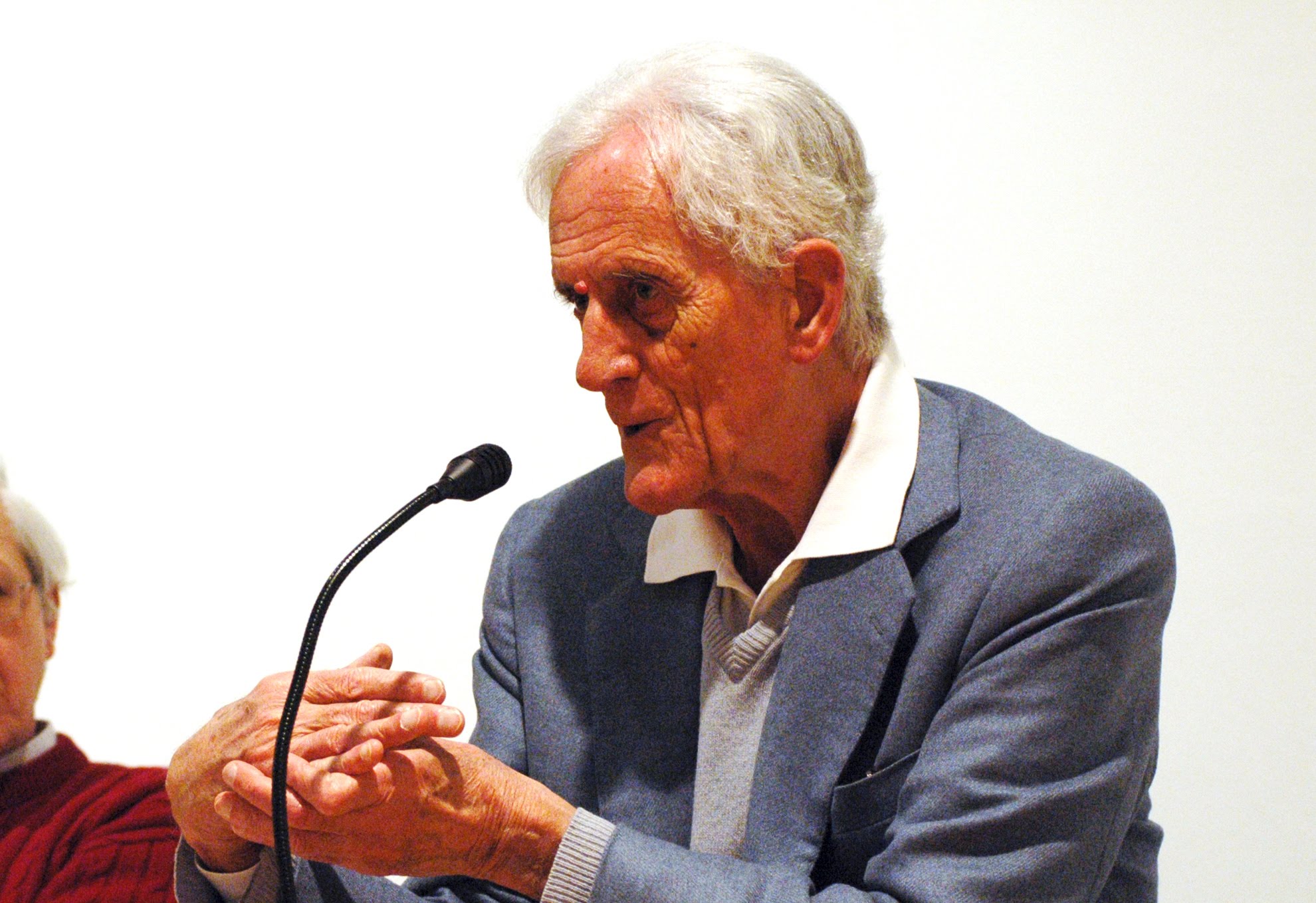
You speak often of the “heart,” but not in sentimental terms, it seems to me.
E. Borgna: The “reasons of the heart” are those that move in St Augustine and that led even Heidegger to write that the essential things of life, i.e., birth, suffering, dying, can be grasped only if we leave behind the bright light of reason, acknowledging that there exists an alternative form of knowledge, which is the one of which Paschal or Scheler speaks, but also the Christian one, I believe. Proust identifies the reasons of the heart as intuition. But what is intuition? I usually give this example: a patient comes into the office, and even before he speaks, before he expresses something of his suffering, thanks to a perception of the invisible–which comes, without doubt, through looks, faces, the smiles that are sometimes tears, the tears that are sometimes smiles–you perceive instantly the deep core that is in him. How can an abstract, rational knowledge tell me something about the feelings, the emotions that others feel? What does rational knowledge have to do with the memory that makes me suddenly relive long-ago events–here is the “intermittent heart”–that are born again in that instant because the light I see this morning outside the window of my office is associated with the light I saw years ago over Monte Rosa, on another day, a day as crystalline and sunny as this one? God is perceptible by the heart and not by abstract reason, said Paschal.
 authentic analysis